
Washington Window Tint Laws: Legal Tint Limits & Regulations (2026 Updated)
Whether you’re considering tinting your vehicle’s windows, just moved to Washington state, or received a tint-related citation, understanding Washington’s window tint laws is essential. Getting the wrong tint level can result in traffic tickets, fines, and the hassle of removing non-compliant film.
At SC Window Tinting, we’ve been helping vehicle owners across Puyallup and the surrounding area stay legal and protected for over 24 years. This guide breaks down everything you need to know about Washington state tint laws, from the exact VLT percentages allowed on each window to medical exemptions, penalties, and how to make sure your tint is fully compliant.
All window tint installations performed by SC Window Tinting meet Washington state legal requirements.

Authorized XPEL Installer
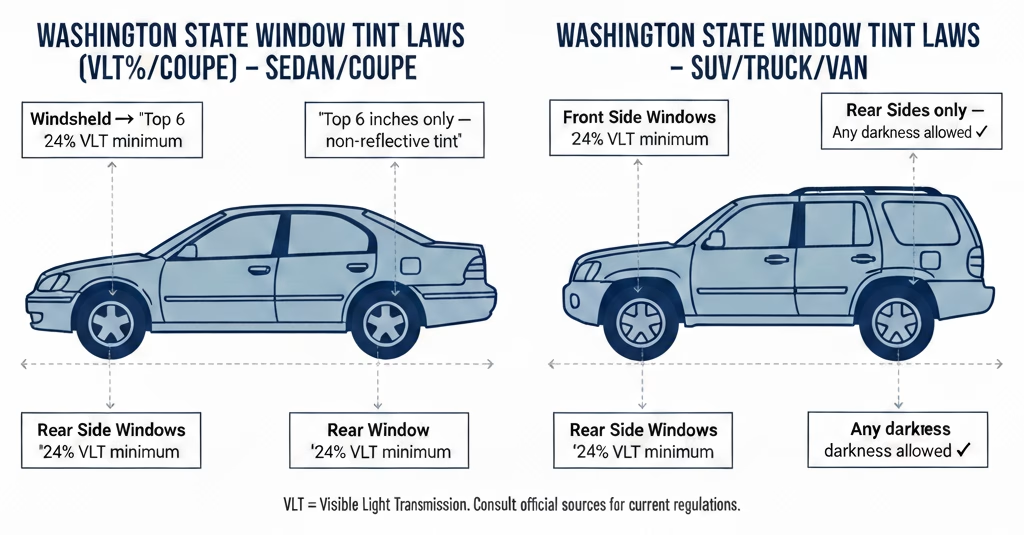
Quick Reference: Washington State Legal Tint Limits
Before diving into the details, here’s a quick-reference table summarizing the legal tint limits in Washington state. All figures refer to the minimum Visible Light Transmission (VLT%) allowed, meaning the tint must let in at least this much light.
Sedans & Passenger Cars (Coupes, Hatchbacks, Station Wagons)
| Window Position | Minimum VLT% Allowed | Notes |
|---|---|---|
| Windshield | Non-reflective tint on top 6 inches only | No tint below the AS-1 line or 6-inch mark |
| Front Side Windows | 24% VLT | Driver and front passenger windows |
| Rear Side Windows | 24% VLT | Same restriction as front sides |
| Rear Window | 24% VLT | Dual side mirrors required if tinted |
SUVs, Trucks, Vans & Multi-Purpose Vehicles (MPVs)
| Window Position | Minimum VLT% Allowed | Notes |
|---|---|---|
| Windshield | Non-reflective tint on top 6 inches only | Same as sedans |
| Front Side Windows | 24% VLT | Same requirement as sedans |
| Rear Side Windows | Any darkness (no minimum) | Can use limo/blackout tint |
| Rear Window | Any darkness (no minimum) | Dual side mirrors required if tinted |
Key Takeaway: For standard passenger cars, 24% VLT is the limit on all windows except the windshield. For SUVs, trucks, and vans, you get significantly more freedom on rear windows; they can be as dark as you want, but the front side windows still must allow at least 24% of light through.
Not sure which category your vehicle falls into? Check the federal vehicle ID label on your driver’s door frame. It will indicate whether your vehicle is classified as a “passenger vehicle” or a “multipurpose passenger vehicle” (MPV). If you’re still uncertain, contact our team, and we’ll help you determine the right tint for your specific vehicle.
Understanding VLT% (Visible Light Transmission)
VLT stands for Visible Light Transmission, the percentage of visible light that passes through both the window glass and any applied tint film combined. It’s the single most important measurement used in Washington’s tint regulations.
Here’s how to read VLT numbers:
- Higher VLT% = lighter tint (more light passes through). A 70% VLT window appears nearly clear.
- Lower VLT% = darker tint (less light passes through). A 5% VLT window is extremely dark “limo tint.”
- 24% VLT Washington’s legal limit for most windows allows roughly one-quarter of visible light through. This provides a noticeable tint with good privacy while still maintaining adequate visibility for driving.
Important: Washington law measures net VLT, the combined light transmission of the glass and the tint film. If your vehicle already has factory-tinted glass (common on SUV and van rear windows), any aftermarket film applied on top must still keep the overall VLT within legal limits. A professional installer will first measure your factory glass and recommend the right film to remain compliant.
Detailed Breakdown of Washington Tint Laws by Window
Washington’s tint regulations are codified in RCW 46.37.430 (Safety Glazing Sunscreening or Coloring). Here’s what the law says about each window position.
Windshield
Washington law allows non-reflective tint to be applied along the top 6 inches of the windshield (or down to the manufacturer’s AS-1 line, whichever applies). This strip helps reduce sun glare without obstructing the driver’s line of sight.
No tint is permitted on the rest of the windshield it must remain clear. This applies to all vehicle types: sedans, SUVs, trucks, and vans.
The AS-1 line is a marking typically found near the top edge of the windshield that indicates the maximum extent where tinting is allowed. If your windshield doesn’t have a visible AS-1 line, the 6-inch rule from the top of the glass applies.
Front Side Windows (Driver & Passenger)
All vehicles in Washington, regardless of type, must allow at least 24% VLT on the front side windows. This is the darkest legal tint for these windows.
This rule exists because front side windows are critical for driver visibility, especially when checking blind spots, making turns, and interacting with law enforcement during traffic stops. There is no exception to this rule based on vehicle type.
Rear Side Windows
This is where the law differs based on your vehicle classification:
- Sedans and passenger cars: Rear side windows must have a VLT of at least 24%, the same as the front.
- SUVs, trucks, vans, and MPVs: Rear side windows can have any level of darkness, including full blackout/privacy tint. However, if the rear windows are tinted darker than the factory tint, the vehicle must be equipped with dual side mirrors in good working condition.
Many SUVs and trucks come from the factory with privacy glass on rear windows (typically around 15–20% VLT). You can add additional aftermarket film to these windows as long as the vehicle has dual side mirrors.
Rear Window
The same vehicle-type distinction applies here:
- Sedans and passenger cars: Must allow at least 24% VLT.
- SUVs, trucks, vans, and MPVs: Can have any level of darkness. Dual side mirrors are required.
Why Do SUVs and Trucks Get More Flexibility?
Washington law classifies SUVs, trucks, vans, limousines, and motor homes as “multipurpose passenger vehicles” (MPVs) under 49 C.F.R. Sec. 571.3. These vehicles typically have larger rear cargo areas where passengers don’t sit facing forward, so darker rear tint is considered less of a safety concern, especially when compensated by dual side mirrors.
Reflective Tint Restrictions in Washington
Beyond the darkness limits, Washington also regulates how reflective your window tint can be. Reflective (metallic or mirrored) tints reduce heat by reflecting sunlight away from the vehicle, but excessive reflectivity can create dangerous glare for other drivers.
Washington law limits window tint reflectivity to no more than 35% on all windows. This applies equally to sedans, SUVs, trucks, and vans.
What this means in practice:
- Moderately reflective tint films (sometimes called “dual-reflective” or “neutral” films) are generally fine as long as they stay under the 35% threshold.
- Highly mirrored or chrome-look films are not legal on any vehicle in Washington.
- High-quality ceramic and carbon-tint films provide excellent heat rejection without excessive reflectivity, making them an ideal choice for Washington drivers.
At SC Window Tinting, we carry premium ceramic and carbon films that deliver top-tier heat rejection while staying well within Washington’s reflectivity limits.
Window Tint Color Restrictions
Washington state prohibits certain tint colors that can be confused with emergency vehicle lighting or that impair visibility for other drivers:
- Red tint — Prohibited
- Amber tint — Prohibited
- Yellow tint — Prohibited
Most standard window tint films (charcoal, gray, neutral, ceramic, carbon black) are perfectly legal. If you’re unsure about a specific color or film, a professional installer can confirm whether it meets Washington’s requirements.
Medical Exemptions for Darker Tint
Washington state does allow medical exemptions for drivers or passengers who need additional protection from sunlight due to a medical condition. Here’s how it works:
Who Qualifies?
Individuals with medical conditions that make them sensitive to sunlight may qualify, including (but not limited to):
- Lupus
- Melanoma or skin cancer history
- Severe photosensitivity
- Xeroderma pigmentosum
- Other sun-sensitive skin or eye conditions
Ultimately, eligibility is determined by a licensed physician.
How to Obtain a Medical Exemption
- Visit your physician. Schedule an appointment with a licensed doctor to discuss your condition and need for additional UV/light protection.
- Obtain written verification. Your physician must provide a signed letter stating that you (or a regular passenger) must be protected from sunlight exposure for physical or medical reasons.
- Keep the letter in your vehicle at all times. Washington does not require you to file a formal application or obtain a state-issued permit. The physician’s written verification itself serves as your legal documentation.
- Present it upon request. If you’re pulled over, provide the letter to law enforcement. It should serve as grounds for an on-scene exemption or dismissal of any citation.
What the Medical Exemption Allows
With a valid medical exemption, Washington permits greater light reduction on all windows and the top 6 inches of the windshield. There is no specific VLT minimum stated for the exemption, allowing a darker tint than normally permitted, including on front-side windows. However, dual side mirrors are still required if the rear windows are tinted, and common sense should be applied to ensure safe visibility.
Tips for Medical Exemption Holders
- Keep a copy of the letter in your glove box and consider backing it up on your phone.
- Make sure anyone else who drives the vehicle knows where the documentation is.
- If you need a medical exemption tint installed, contact SC Window Tinting. We can help you select the right film for your medical needs while ensuring proper documentation and installation.
Enforcement and Penalties for Illegal Tint in Washington
Violating Washington’s window tint laws is classified as a traffic infraction under RCW 46.37.430. Here’s what you can expect if your tint isn’t compliant:
What Happens If You Get Pulled Over
- Traffic citation and fine. Fines for illegal tint in Washington typically range from $124 to $136 per offense, though amounts can vary by jurisdiction. Some sources report fines up to $300.
- Fix-it ticket (correction order). You may receive a correction order requiring you to remove or adjust the non-compliant tint and provide proof that the violation has been corrected.
- Tint meter inspection. Officers carry portable handheld VLT meters that can measure your tint on the spot during any routine traffic stop. There’s no “close enough”; the meter gives a precise reading.
- Registration issues. In extreme or repeated cases, your vehicle’s registration renewal may be denied until the tint violation is corrected.
Additional Legal Consequences
- Unlawful installation is a misdemeanor. Under RCW 46.37.435, providing or receiving payment for installing non-compliant tint is treated as a gross misdemeanor, a more serious offense than a standard traffic infraction.
- Repeated violations add up. Multiple tint tickets create a pattern that makes you more likely to be noticed and stopped again.
- Tint certification stickers must be placed by the installer between the film and glass on the driver’s side window. Missing stickers can raise red flags during a stop.
The Bottom Line on Enforcement
Don’t gamble with illegal tint. The consequences go beyond a simple ticket removal and reinstallation costs time and money. The safest approach is to install compliant tint from the start.
At SC Window Tinting, every installation includes a legal compliance sticker and uses certified, state-compliant film. We measure your factory glass, recommend the right VLT, and ensure everything meets Washington state requirements so you never have to worry about a tint ticket.
Additional Washington Tint Requirements
Beyond VLT and reflectivity, Washington has several other tint-related regulations you should know:
Dual Side Mirrors
If any window behind the driver is tinted (including factory privacy glass), Washington requires that the vehicle have both left- and right-side mirrors in good working condition. Most modern vehicles come standard with dual mirrors, but it’s worth verifying, especially on older models.
Film Certification
Film manufacturers are required to certify that the tint they sell in Washington state meets legal standards. When working with a professional installer, ask whether the film is state-certified. At SC Window Tinting, we exclusively use certified, premium-quality film from trusted brands.
Compliance Sticker
Any professional tint installation in Washington must include a compliance sticker placed between the film and the glass on the driver’s side window. This sticker must be between ¾” × 1½” and 2″ × 2½” and clearly show the installer’s business name and state tax ID number. It serves as proof that the installation was done by a legitimate business using compliant materials.
No VLT Variance Allowed
Unlike some states that allow a small tolerance (e.g., ±3%), Washington law allows no variance in tint darkness. Your tint must meet the exact VLT requirements, not “close enough.” This is another reason professional installation with proper measurement tools is essential.
How to Ensure Your Tint Is Compliant
Whether you’re getting a new tint installed, buying a used car with existing tint, or moving to Washington from another state, here’s how to make sure you stay on the right side of the law:
- Choose a reputable, professional tint shop. A qualified installer will know Washington’s laws inside and out and will only install compliant film. They’ll also provide proper documentation and stickers. SC Window Tinting has been serving the Puyallup area for over 24 years with fully compliant installations.
- Verify the VLT% before installation. Don’t just go by how the film looks on a sample card. Ask your installer to confirm the net VLT% (film + glass combined) for each window.
- Have the existing tint measured. If you purchased a used vehicle or are moving from a different state, have your windows tested with a VLT meter. Any professional tint shop can do this quickly. If your tint is too dark for Washington, it’s far cheaper to fix it proactively than to deal with tickets and forced removal.
- Check your vehicle classification. Know whether your vehicle is a standard passenger car or an MPV, the rules differ significantly for rear windows. Check the federal ID label on your driver’s door frame.
- Keep documentation handy. After installation, make sure you have a receipt showing the film specifications and that the compliance sticker is properly placed.
Concerned about whether your current tint is legal? Contact SC Window Tinting for a free tint check. We’ll measure your windows with a professional VLT meter and let you know if you’re compliant, no appointment necessary.
Washington vs. Neighboring State Tint Laws
If you travel frequently between Washington and neighboring states or you’re moving to Washington, it’s helpful to understand how the laws compare. Your tint needs to be legal in the state where your vehicle is registered.
| Regulation | Washington | Oregon | Idaho |
|---|---|---|---|
| Front Side Windows | 24% VLT | 35% VLT | 35% VLT |
| Rear Side Windows (Sedan) | 24% VLT | 35% VLT | 20% VLT |
| Rear Side Windows (SUV/Truck) | Any darkness | Any darkness | 20% VLT |
| Rear Window (Sedan) | 24% VLT | 35% VLT | 35% VLT |
| Rear Window (SUV/Truck) | Any darkness | Any darkness | 35% VLT |
| Windshield | Top 6 inches, non-reflective | Top 6 inches, non-reflective | Above AS-1 line or top 6 inches |
| Max Reflectivity | 35% | 13% | 35% |
| Restricted Colors | Red, amber, yellow | Red, amber, yellow, gold, black | None |
| Medical Exemptions | Yes | Yes | Yes |
Key Differences to Note
Washington allows a darker front tint than Oregon or Idaho. At 24% VLT, Washington’s front side window limit is more permissive than Oregon’s and Idaho’s 35% limits. If you move to Washington from Oregon, your front tint is likely already legal. But if you’re moving from Washington to Oregon, your 24% front tint would be too dark and would need to be changed.
Idaho has uniform rules. Unlike Washington and Oregon, Idaho doesn’t differentiate between sedans and SUVs/trucks — the same limits apply to all vehicle types. Idaho also allows slightly darker rear side windows (20%) than front (35%) for all vehicles.
Oregon has stricter reflectivity limits. Oregon only allows 13% reflectivity, compared to Washington’s more generous 35%. A reflective tint that’s legal in Washington could violate Oregon law.
If you regularly cross state lines, it’s wise to tint to the stricter standard. Talk to our team about options that keep you legal across multiple states.
Why Professional Installation Matters for Legal Compliance
You might be tempted to save money with a DIY tint kit or a budget installer, but when it comes to staying legal in Washington, professional installation is worth every penny. Here’s why:
- Accurate VLT measurement. Professional shops use calibrated tint meters to measure your factory glass and calculate the exact film needed to meet the legal VLT. Guessing or relying on the film’s stated VLT without accounting for factory glass can easily result in tint that’s too dark.
- Certified, state-compliant film. Reputable shops stock film that’s been certified for use in Washington. Cheap, uncertified film from online retailers may not meet the state’s VLT, reflectivity, or color standards.
- Proper compliance sticker. Washington requires a sticker from a licensed installer placed between the film and the glass. DIY installations don’t have this, which can lead to questions during traffic stops.
- Bubble-free, long-lasting results. Professional installation ensures the film is applied cleanly, without bubbles, gaps, or peeling that can affect both the look and the measured VLT over time.
- Warranty protection. SC Window Tinting backs every installation with a lifetime warranty. If film fades, peels, or develops defects, we’ll replace it, keeping you compliant for the long haul.
At SC Window Tinting, our technicians have over 24 years of experience installing window tint that meets Washington state requirements. We’ve tinted thousands of vehicles — from daily commuters to luxury cars and fleet trucks — and every installation is done right the first time.
Frequently Asked Questions About
Washington Window Tint Laws
For standard passenger cars (sedans, coupes, hatchbacks), the darkest legal tint is 24% VLT on all side and rear windows. For SUVs, trucks, and vans, the front side windows must be at least 24% VLT, but rear side and rear windows can be any darkness, including full blackout tint.
It depends on the window and vehicle type. 20% VLT is below the 24% legal minimum, so it would be illegal on any window of a sedan or on the front side windows of any vehicle. However, 20% is perfectly legal on the rear side and rear windows of an SUV, truck, or van since those windows have no VLT minimum.
No. Washington only allows non-reflective tint on the top 6 inches of the windshield (or down to the AS-1 line). The remainder of the windshield must stay clear. A medical exemption allows additional tint only on the top 6 inches of the windshield, not the entire windshield.
5% VLT is illegal on the front side windows of any vehicle and on any window of a standard sedan. It can only legally be applied to the rear side and rear windows of SUVs, trucks, and vans. The only exception is if you have a valid medical exemption from a licensed physician.
You’ll typically receive a fine ranging from $124 to $136 (potentially up to $300 depending on jurisdiction) and may be issued a correction order requiring you to remove or adjust the illegal tint. Officers use portable VLT meters to verify compliance on the spot.
Yes. Washington law requires professional installers to place a compliance sticker between the tint film and the glass on the driver’s side window. The sticker must show the installer’s business name and state tax ID number. This is your proof of a legal, professional installation.
Yes. Washington measures the combined VLT of the glass and any applied film. If your vehicle has factory-tinted glass, any aftermarket film applied over it must keep the total VLT above the legal minimum. A professional installer will measure your factory glass before recommending a film.
Yes. If you have a medical condition requiring extra sun protection, a licensed physician can provide written verification allowing a darker tint than normally permitted. You must carry this documentation in your vehicle at all times. No formal state application or permit is required.
Get a Legal, Professional Tint Installation in Puyallup
Don’t risk a ticket or the hassle of non-compliant tint. SC Window Tinting has been the trusted choice for professional, legal window tinting in Puyallup and the surrounding area for over 24 years. Every installation we perform meets Washington state legal requirements guaranteed.
Here’s what you get with SC Window Tinting:
- Premium ceramic and carbon films from trusted brands
- Precise VLT measurement and legal compliance on every vehicle
- State-required compliance sticker included with every installation
- Bubble-free, expert application with a lifetime warranty
- Over 24 years of experience and thousands of satisfied customers
Ready to get your windows tinted the right way?
Schedule Your Free Consultation → | Call Us: (253) 376-4826
Legal Disclaimer
The information in this guide is provided for educational purposes and reflects our understanding of Washington state window tint laws under RCW 46.37.430 as of the date last updated. Window tint regulations may be updated by the Washington State Legislature, and local jurisdictions may interpret or enforce these laws differently. SC Window Tinting is not a law firm, and this guide does not constitute legal advice. We recommend verifying current regulations with the Washington State Patrol or your local DMV before making tinting decisions. For legal questions about tint citations or violations, consult a qualified attorney.
Get a Free Quote Today
Fill out the form below to get started.